Mary: young girl, mother of God
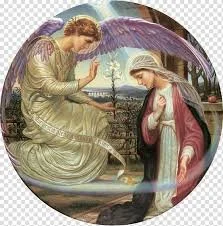
In this fourth Sunday of Advent message, from Luke 1, we examine the repercussions of Mary saying yes to birthing and raising the Son of God. Click here for the recording of this 12/21 Service, and you can fast-forward to 32:42 to get to the start of the sermon. Note that we did not have a Sunday service on 12/14, due to severe weather.
Our text comes from Luke 1:26-38
26In the sixth month the angel Gabriel was sent from God to a city of Galilee named Nazareth, 27 to a virgin betrothed to a man whose name was Joseph, of the house of David. And the virgin’s name was Mary. 28And he came to her and said, “Greetings, O favored one, the Lord is with you!” 29But she was greatly troubled at the saying, and tried to discern what sort of greeting this might be. 30And the angel said to her, “Do not be afraid, Mary, for you have found favor with God. 31And behold, you will conceive in your womb and bear a son, and you shall call his name Jesus. 32He will be great and will be called the Son of the Most High. And the Lord God will give to him the throne of his father David, 33and he will reign over the house of Jacob forever, and of his kingdom there will be no end.”
34And Mary said to the angel, “How will this be, since I am a virgin?”
35And the angel answered her, “The Holy Spirit will come upon you, and the power of the Most High will overshadow you; therefore the child to be born will be called holy— the Son of God. 36And behold, your relative Elizabeth in her old age has also conceived a son, and this is the sixth month with her who was called barren. 37For nothing will be impossible with God.” 38And Mary said, “Behold, I am the servant of the Lord; let it be to me according to your word.” And the angel departed from her.
Angels in the Bible
Angelos, messenger, either human or supernatural
All have masculine names
They serve to do God’s bidding
They can have superhuman strength
They can be dispatched by God to serve us in our time of need
Gabriel is sent from God to Nazareth with a message for Mary
Nazareth was insignificant in Mary’s day; it had only 1 spring; Jesus would later leave Nazareth at 30 to be baptized by John; Nathaniel later asked if anything good can come out of Nazareth; Jesus later left it because of their unbelief (zpeb, 4.390)
Mary was a virgin, parthenos (male or female) pledged to be married to Joseph, from the Davidic line
Notice Gabriel’s message to her
She is favored, charitoō- to be given graces
The Lord, (kurios- master) is with her; did she understand?
Her immediate response is that she is troubled diatarassō- confused
She is trying to discern (dialogizomai- to make sense or understand) what he is saying, and its meaning
“There is no need to fear, mary- you have found favor (charis- gifts of grace) with God”
You will conceive, bear a son, call him Jesus, he will be great (megas), son of the most high, and god will give him David’s throne and will reign over Jacob’s house forever, and his kingdom will not end
Notice her reaction
She has only one- “how can this be, since I am a virgin” (ginosko- to be ”unknown” by a man)
She sidesteps all the pageantry of giving birth to a king, and simply reverts to basic biology
Gabriel’s response to her reaction
“The holy spirit will come upon you and the power of god will cast a shadow over you
Because this unique pregnancy, the child will be called holy- the son of God
Elizabeth, in her old age, is also 6 months pregnant
Nothing is impossible with God”
Mary’s final reaction
“I am the servant (doule- female bond slave) of the master”
By using this word she is stating that she willfully is coming under the full lordship of her master
“Let the very thing you have declared (rhema) to me, happen to me”
Then the messenger leaves her, and she is alone
What Mary’s story says to us
God intervenes in the mundane of our lives- the everyday minutia; sometimes we miss it
He sends messengers to get our attention- we either accept or reject them
Sometimes God asks us to participate in something that makes no rational sense, that defies logic
Mary could have said no, just as we can- people opt out of his plan for them all the time; he will not violate your will
By Mary saying yes to god’s plan, there were people who likely doubted her moral purity for the entirety of her life- friends, family, even joseph, for a while
By saying yes to God’s plan, 33 years later, she witnessed not only the crucifixion, but the resurrection
By saying yes to god’s plan for us, we witness things we otherwise could never see