Nehemiah Faces Opposition
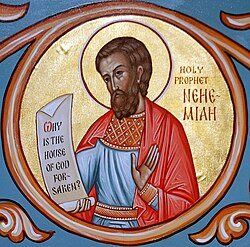
As we continue with this 6th message on Nehemiah, we examine how Nehemiah responded to Sanballat's opposition, and what we can learn from that.
Click here for the recording of this 1/18/26 Service, and you can fast-forward to 29:32 to get to the start of the sermon.
Our text is from Nehemiah 4
1 Now when Sanballat heard that we were building the wall, he was angry and greatly enraged, and he jeered at the Jews. 2 And he said in the presence of his brothers and of the army of Samaria, “What are these feeble Jews doing? Will they restore it for themselves? Will they sacrifice? Will they finish up in a day? Will they revive the stones out of the heaps of rubbish, and burned ones at that?” 3 Tobiah the Ammonite was beside him, and he said, “Yes, what they are building— if a fox goes up on it he will break down their stone wall!”
4 Hear, O our God, for we are despised. Turn back their taunt on their own heads and give them up to be plundered in a land where they are captives.
5 Do not cover their guilt, and let not their sin be blotted out from your sight, for they have provoked you to anger in the presence of the builders.
6 So we built the wall. And all the wall was joined together to half its height, for the people had a mind to work.
Some questions come to mind
What can we know about Sanballat?
What was the source of his anger?
Why did he find it necessary to vent his anger before his brothers and the Samaritan soldiers?
Why did he mock the Jews?
How did Nehemiah respond?
Lastly, how did the people respond?
Who Sanballat was
Sanballat was the governor of Samaria during Nehemiah's time
He opposed Nehemiah's efforts to rebuild the walls of Jerusalem (ch2, 4, 6, 13)
Sanballat formed alliances with other leaders to thwart Nehemiah's plans
He used mockery and intimidation to discourage the Jewish people
Sanballat attempted to lure Nehemiah into a trap to undermine his leadership
His actions exemplified the external opposition faced by the Israelites during the rebuilding efforts
He had a syncretistic (blended) worship style, with a preference for Yahweh
His daughter married a son of Eliashib, the high priest
Josephus says he founded a temple on Mt Gerazim, with his son in law as high priest of that temple (Josephus, ZPEB)
What was the source of Sanballat’s anger?
“angry, and greatly enraged”
Did he feel threatened?
He was viewing the Jews through the lens of a Samaritan- his worldview determined how he saw everything in his world
”we do not see the world as it is; we see the world as we are”- Anais Nin
Why did he find it necessary to vent to his brothers and soldiers?
Perhaps he was simply rallying the troops
People who polarize (take sides) usually want others to polarize with them; it is human nature to want others to see things as we see them
Thus, his associate, Tobias
Why did he mock the Jews?
As a Samaritan, he had no regard for the Jews; only the Pentateuch, worshipped on Mt. Gerizim, no regard for the law, prophets, or Jerusalem, all of which were sacred to the Jews
He had a completely different worldview
Thus, he mocked based on his worldview
The Bible sanballat used- Pentateuch
He used only the Pentateuch (1st 5 OT books); by number of books, 12.8%; by word count, about 25%
If Sanballat is using only 12-25% of the scriptures that Nehemiah is using, will he see things differently?
What Bible are we reading, do we know it, and are we reading it correctly?
The place Sanballat worshipped - Mt Gerazim
The center of worship for Samaritans
Sacred to Jews as well- Abraham and Jacob entered the promised land there; Joseph’s bones are buried there; Joshua took possession of the Promised Land there; he read the law in full to Israel there
When Israel divided, the Northern Kingdom chose Gerazim; the Southern Kingdom remained in Jerusalem
Jn 4.20-23; Jesus said the location is less important than the how “But the hour is coming, and is now here, when the true worshipers will worship the Father in spirit and truth, for the Father is seeking such people to worship him.” From the heart, and truthfully
The verbiage of his mocking
“feeble Jews”- God’s chosen people
“restore it for themselves?”- no, it is the city of God
”Will they sacrifice?”- at the core of their worship
“Will they finish up in a day?”- 52 days, Neh 6.15
“Will they build with rubbish?”- they used what they had
*An Arabian red fox weighs 6-13 lbs
How did Nehemiah respond?
He prayed- “hear, o our god”
Truthfully- “we are despised”
He asked for God’s intervention- “Turn back their taunt on their own heads and give them up to be plundered in a land where they are captives. Do not cover their guilt, and let not their sin be blotted out from your sight, for they have provoked you to anger in the presence of the builders.”
He was looking out for his workers
How did the people respond?
“So we [better together] built the wall. And all the wall was joined together to half its height [progress, with more to be done], for the people had a mind [lev] to work.”
The Hebrew understanding of lev
inner man, mind, will, heart, understanding, midst, soul, knowledge, thinking, reflection, memory, inclination, resolution, determination (of will), conscience; the seat of appetites, emotions, passions and/or courage
They brought all this to the building of the wall
Leadership lessons from Nehemiah
There is no substitute for a group of people, working together, for the greater good- God’s people are better together, accomplishing more
There was opposition- he looked to God to address that
Nehemiah was clearly influenced by his worldview, and sanballat, by his worldview
When opposed, his first move was vertical toward God, not horizontal toward sanballat
He prayed honestly about how he felt- the lord heard those prayers
He/his workers were successful in building the wall to half its height, and did it as unto God; the job well done was its own reward